
Foraging for solutions…
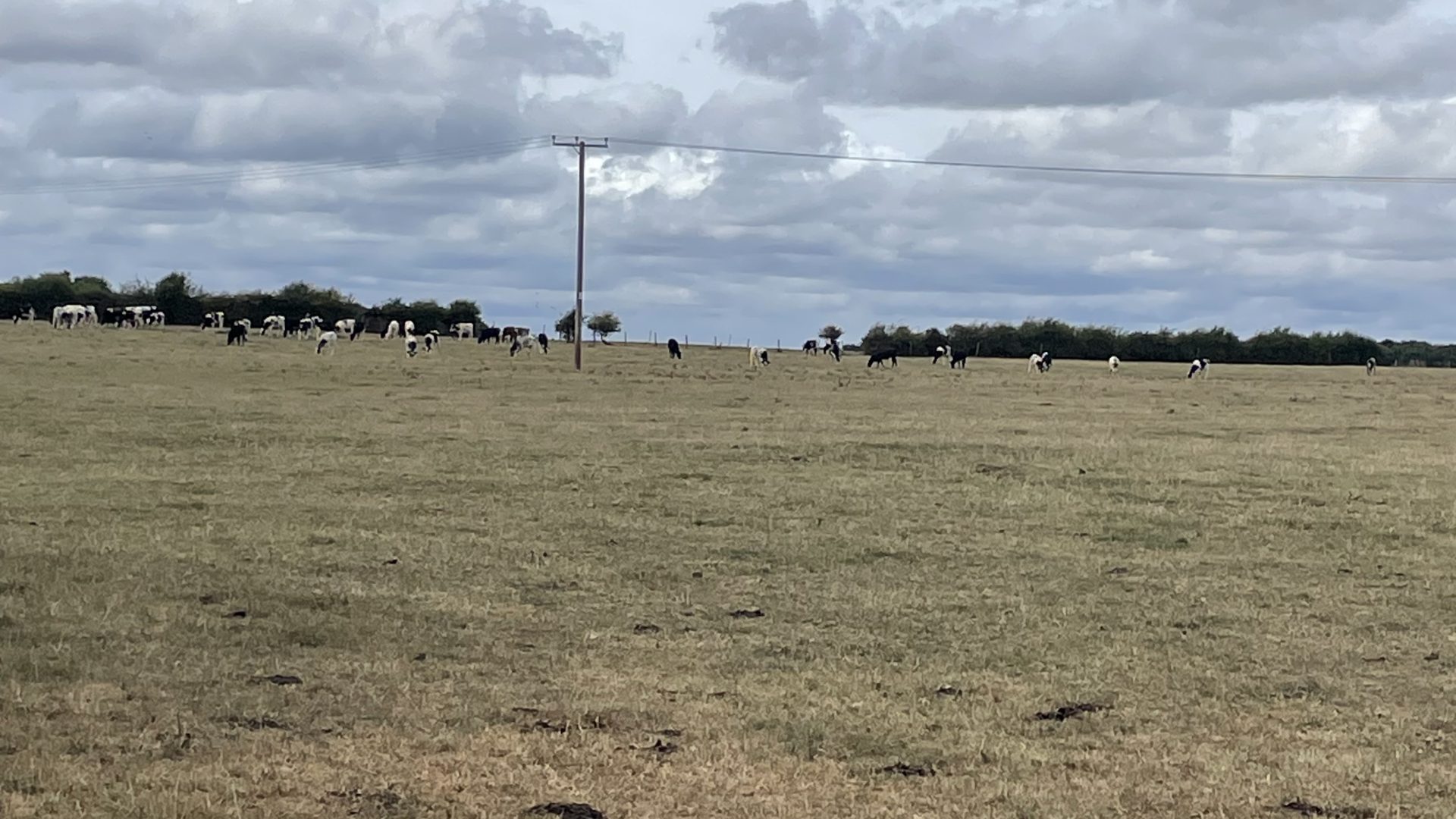
A second year of unprecedented, extended heat and little, or no rain for 8-10 weeks (depending on your geography!) has left many farmers in the Midlands, Wales and south of England wondering how the winter will shape up for them when it comes to feeding stock so we take a look at the outlook below…
Grass
South of Manchester there is little, if any, usable grass in fields, whether for grazing or making silage as we stand at the end of August. The rain has finally arrived and hopefully, we see further rain and some favourable growing conditions to allow a late, October, cut of grass silage to top pits up…
After a strong start to the forage season when a lot of farmers went early with grass silage, taking first cut in late April and into the start of May pits looked in reasonable health as second cut was done by late May/early June before a third cut was taken before the grass completely stopped growing in the second week of July. These farmers typically house and feed cows 365 days of the year and will have reasonable stocks of grass silage, but after the 2025 challenges they may have been low on (or out of) silage and carryover so things will remain tight.
More typical, traditional dairy farmers, who graze cows through summer should have had good first and second cuts (quantity and quality) as well, but the flip side is they will have started to feed that already when they wouldn’t have typically started as soon or fed as heavily.
Compared to summer 2025, when milk price averaged 44ppl (AHDB July 2025 price) and was in the range 40-55p (including constituents to get those very high prices) and feed price was reportedly similar, then 2026 has been far more challenging. Milk price has slipped back to average 34.5ppl but this includes aligned prices and in reality, many have been below 30ppl whilst feed prices have remained static so hence we see the 3-5% declines in GB milk output (July was back 3.2% yr-on-yr following on the back of 3% in June as well).
The milk price to feed price ratio has slipped from the historic highs of 1.58 last September/October to 1.18 for the April-June period this year, and against the long-term average of 1.30 but that is based on the 34.5ppl figure. If you have gone through summer at 27-30ppl (and there are some even lower than this) then your milk price to feed price ratio is more like 0.92-1.02! This all means that farmers are less willing (or able) to feed cows where grass is/has been short and so we even see some selling stock to prepare for winter and tight forage stocks
Maize
Reports that early crops are variable within fields and look to be smaller than 2025 overall means that maybe maize will not be the saviour it was in 2025. Following the historically early maize harvest of 2025, we are seeing plenty of the same again with harvest kicking off in early- to mid-August in the Midlands and south of England with crops dying off from lack of moisture once again. Crops I have seen have ranged from average (15-18t/acre) to poor – failed to form a cob or stunted plants which will yield 5t/acre maybe (and being harvested as close to the ground as you would see a combine harvesting wheat or barley to maximise yield!!).
It is too early to be sure on maize, but indications are for lower yields than 2025 and a large variation…
Solutions
More fast grass being drilled behind maize will mean early cuts of silage in 2027 which won’t solve the short-term issues but for intensive dairy farmers it gives an early chance to refill clamps next spring at least.
Looking at options for the actual winter then the ultimate is to sell 5-10% of the herd as this instantly saves 5-10% of forage requirement and barren price remains strong and typically the rest of the herd cover most of the ‘lost’ milk when the others exit and so farm output isn’t that negatively impacted. In terms of feed then we can look at these options:
Youngstock
These animals will eat plenty of forage – a bulling heifer of 420kg (mature cows more like 700kg now) will eat 8.5kg DM/day so that’s typically 80% forage at least so 6.8kg forage DM ~24-25kg FW grass silage (at 28% DM)! Obviously, younger animals consume less but in the 6-24 month range of animals eating plenty of forage this is a good middle ground example. What to advise:
- Add straw to the diet – consider 1-3kg of straw per animal as that will save 3-9.5kg of silage per animal. Do this as soon as they are housed and over November to mid-April period that saves 0.5 – 1.5 tonnes of 28% DM silage (25 – 75 tonnes per 50 animals). Balance the protein and energy shortfall with liquid feed, concentrate or maize gluten depending on farm system/feed handling
- Replace 100% of silage with straw – many farmers would employ this system traditionally and works well. Obviously saves 100% the silage and means can all go to milking cows and youngstock will do well and bonus of less slurry/drier bedding than if using silage. Key is to supplement properly in terms of feeding enough liquid/concentrate/maize gluten as a 350kg heifer would consume approximately
- 4kg of straw and 6kg of maize gluten plus 100g mineral (£1.89/animal/day estimated cost) or,
- 4kg of straw and 6kg of 20% CP compound (£1.92/animal/day estimated cost) or,
- 6kg of straw alongside 2.5kg 40% protein molasses plus 2kg 20% CP rearer plus 50g minerals (£1.85/animal/day estimated cost)
Dry Cows
Ensure dry cows are being fed at least a partial straw ration – aim for a minimum of 3kg/cow/day and ideally 5-6kg/cow/day. Ideally, straw should be chopped before being put into the mixer wagon so that you know it is processed and they will eat it and you use less fuel mixing. Contractors can offer this service, and straw can be chopped in advance on a weekly/fortnightly/monthly basis and stored inside or outside depending on space and scale of farm/stock numbers. Alternatively, include in the mixer wagon and chop before feed out but ensure knives are sharp and straw is 2-3” long (maximum) at the feed fence. If no mixer wagon on farm, then offer straw ad lib and limit the silage offered whilst ensuring all cows can access that silage at the same time when it is offered and adequate supplementation with high-quality dry cow nuts/rolls as well.
When using a mixer wagon balance the diet using milking cow ration ingredients and a good quality dry cow mineral.
Milking cows
- Use moist feeds as forage extenders – brewers grains, moist blends, moist feeds (Pressed Pulp the best option of all but limited availability) and ensure they are suitable forage extenders. The effectiveness of moist feeds depends on continuity of supply and dry matter of the feed in terms of how many kgs/cow/day you will save in forage.
- Dry feed options – products like wheatfeed, soya hulls, sugar beet pulp and maize gluten are reliable forage replacers (palm kernel maybe considered but not typically as palatable and certainly not as digestible as others mentioned) and every kg replaces approximately 3kg of silage. I would advise 2-3kg of dry feed is used to make it ‘worthwhile’ using in the diet as then saving 6-10kg of silage per cow per day and the sooner in the winter changes are made the better – don’t wait until February to act as will save enough forage for a few days at best! Challenges arise from availability of these feeds and then handling on-farm as typically supplied in arctic loads, or with a supplement for an 8-wheeler, and then where can they be stored when tipped (sheeted in a straw bale bunker outside will suffice if done properly).
- Liquids – depending on forage base of the ration then there is a liquid feed option for all scenarios. Not seen as a direct forage replacer but can be used to balance lower nutrient value feeds like straw, or if additional wholecrop is being fed as they can be higher protein and are obviously a palletiser.
- Add straw to the milking ration – yes, even for a milking cow we can feed 1.5-2.5kg/cow/day of (chopped) straw and still attain high production (experience of 1.5-2kg/cow/day in a herd producing 36-40kg/cow/day on 2x). Every kilogram of straw, like a concentrate, will save around 3kg of average dry matter silage (28-30% DM) and so multiply that by number of cows and number of days you plan to do it over (sooner the better!) then for example 200 cows for 180 days (1st Nov to 30th April) will save:
- 110t of silage for 1kg/cow/day straw inclusion (saving 3kg/cow/day silage)
- 160t of silage for 1.5kg/cow/day straw inclusion (saving 4.5kg/cow/day silage)
- 215t of silage for 2kg/cow/day straw inclusion (saving 6kg/cow/day silage)
- 270t of silage for 2.5kg/cow/day straw inclusion (saving 7.5kg/cow/day silage)
These rations will need attention from a nutritionist to balance for energy and protein supply using feeds mentioned previously (liquids/dry feeds/moist feeds) but offer significant forage savings over the full winter period.
A key element is obviously to do forage budgets to determine how much forage is needed to be saved and so that can start now and be updated periodically as, and when, more crops are harvested. This is certainly a case of ‘to be forewarned is to be forearmed’ and being on the front foot to secure feeds for the winter and start making adjustments before you are truly short of forage in terms of what is left in the pit come spring.
